
I facilitated a workshop with 12 colleagues with the LEGO® Serious Play® (LSP) Method and Materials last week.
Objective of the workshop was to strengthen the collaboration of the team and to develop a common vision till 2024.
The workshop consisted of four parts
- Skill building
- Team development based on the Johari Window
- Development of a common vision with a shared model build
- Identify agreement and collect relevant points
Skill Building and Team development
The setup for part 1 and 2 of the workshop you can see in the picture below, in the bags are LEGO Starter Kits.
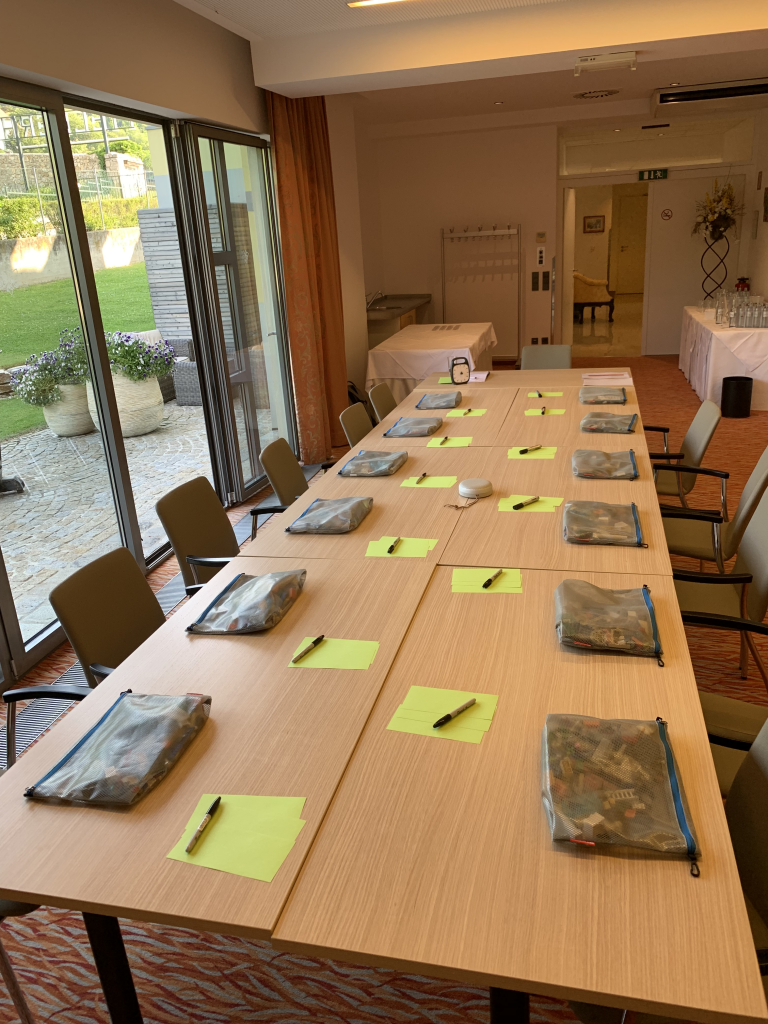
The Skill build is an important part, as the participants are introduced to the method. It brings everyone on the same level of understanding and teaches how to use all channels – haptic, auditiv and visual. By using LSP everyone is engaged and gets his airtime.
The Skill build takes around 45 Minutes in a group of this size, after completion and a small break the second step “team development” starts. It consists of three different parts and in the last part every participant gets a feedback with a model build by one of the colleagues.
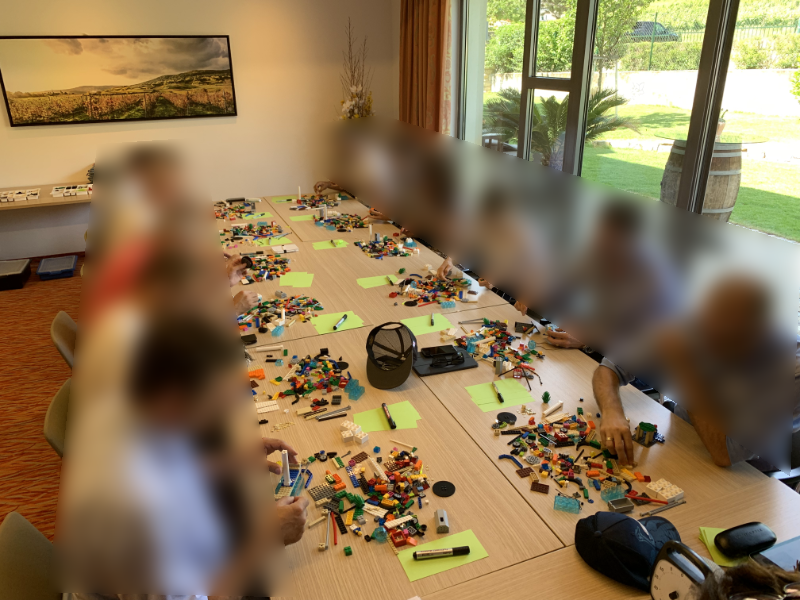
Shared Build of the Future Vision
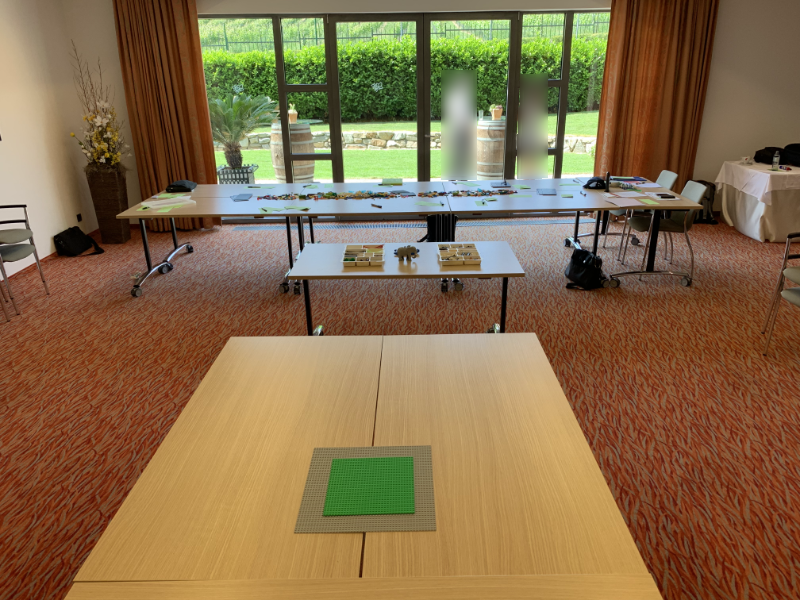
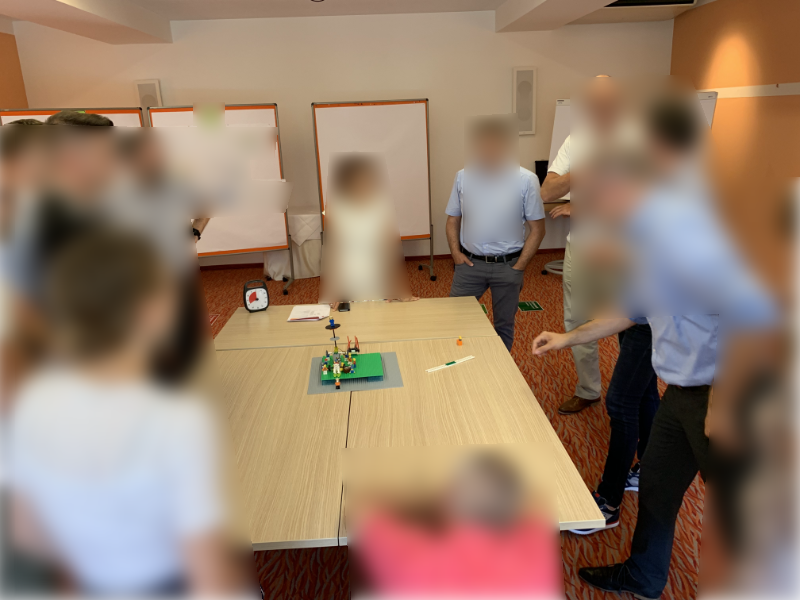
During a small break the room is prepared for the last part of the workshop. This time special LEGO sets are used (middle table) and a mix of LEGO is provided for the participants (table in the background). The build area for the shared model is on the front table.
As you can see the participants are not sitting anymore, they are moving around to get their parts for their model. After finishing the usual process is used, where everyone explains its model. Then the relevant parts of these models are used for the shared model build.
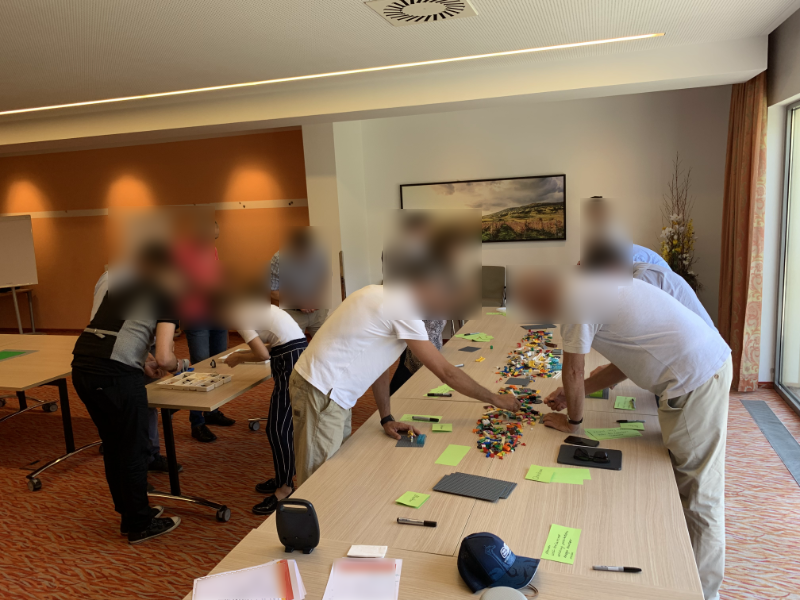
During the shared model phase the participants are in constant discussion and rework of their model. They talk about the meaning, the position and what can be added to make the meaning of their model more clear.
This is the final model of the teams shared vision for their future. As the story behind the model is constantly shared during the build process, everyone understands the parts, their relationship and meaning – a common understanding is established. It is very interesting to see how the model evolves over time. Facilitating the process with 12 participants makes a lot of fun, but is also a quite demanding task, as it is important that everyone stays involved and is included in the decisions about the changes.

Scale of Agreement and collection of relevant points
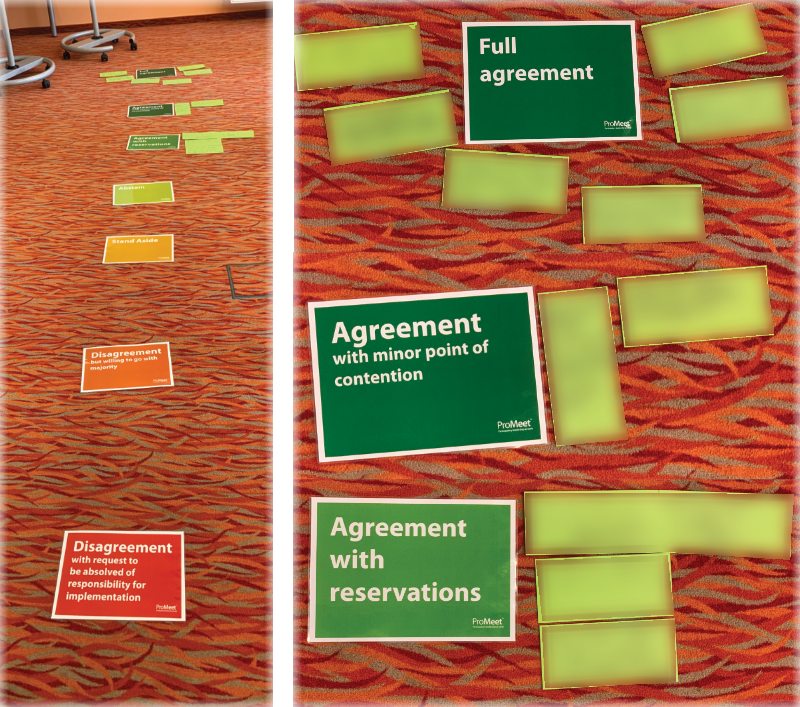
Finally the commitment of each participant and important points are collected with the scales of agreement method. As you can see the vision has a high agreement level (there are only cards in the upper three level of agreements).
From here the team planes the next steps needed to archive their vision, this part is then out of the scope of the workshop.